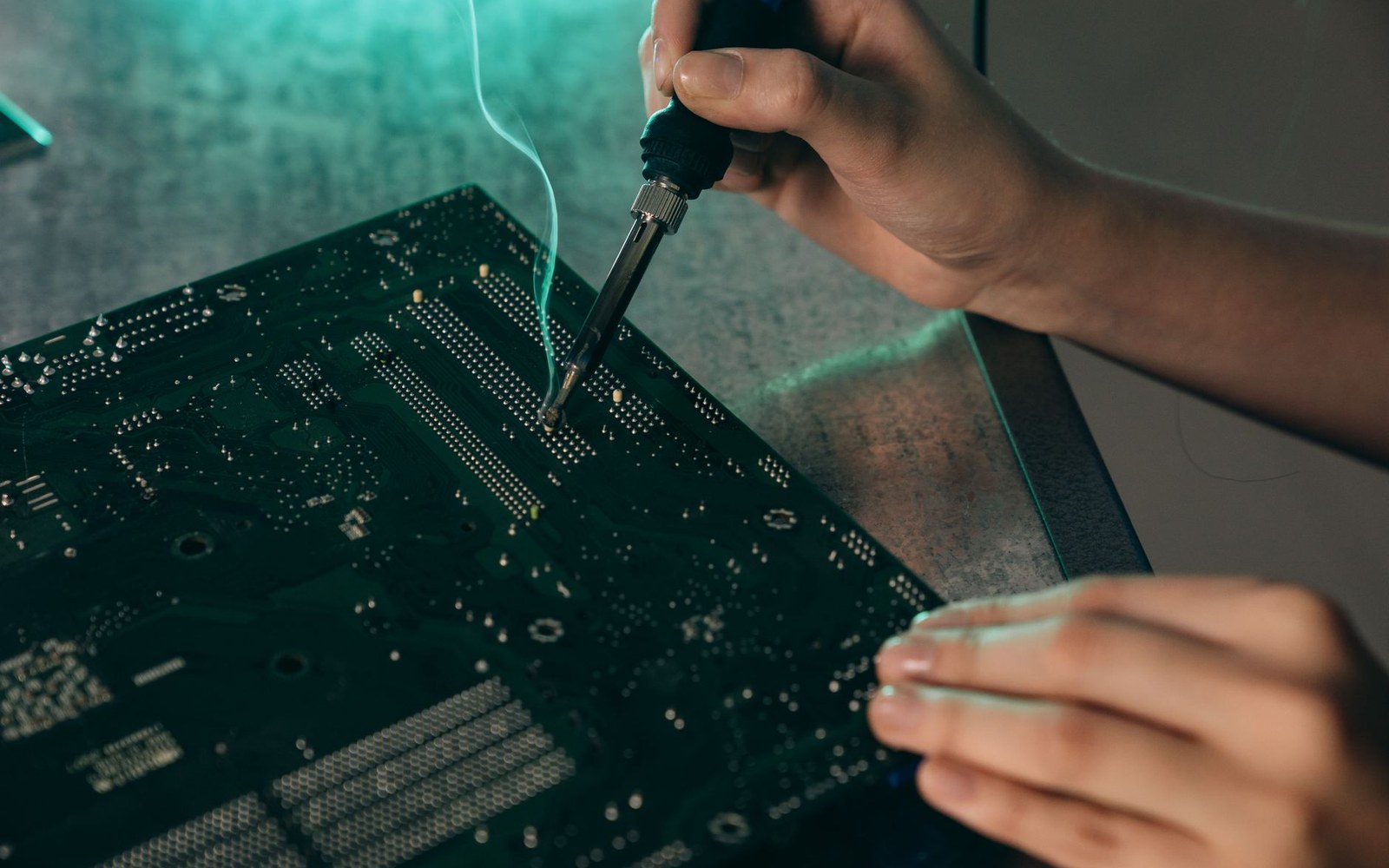
The gap between physical and functional life
A television made in 1985 that still powers on is a curiosity, not a surprise. The same device made in 2015 and sold with a companion app has a second clock running from the moment it leaves the factory — and that clock is controlled by a server room the buyer has never seen. The distinction between how long a thing can work and how long it does work has widened sharply across the last fifteen years, and the widening is not accidental.
Physical durability has not collapsed. The capacitors, connectors and display panels in a mid-range television or a washing machine are engineered to tolerances that imply a decade of use. The European Commission's Ecodesign regulation, which came into force in stages from 2021, requires manufacturers to supply spare parts for major appliances for seven to ten years after a product goes on sale — a target the regulation would be pointless to set if hardware routinely failed before then. The physical object is, broadly, fine. What is not fine is everything else.
Software support is the first limiter. A smartphone platform typically receives operating system updates for three to five years from release — Samsung has pushed flagship Android devices to seven years as of 2024, and Apple has sometimes exceeded six, but the median across the Android ecosystem sits much lower. After the update window closes, the device continues to function in the sense that it powers on, but security vulnerabilities accumulate without patches, and apps progressively drop support for older OS versions. The phone works; the phone is not a safe or fully capable device. These two things can both be true.
Chronology
- 2014Nest acquires Revolv
- May 2016Nest shuts down Revolv cloud service; all units permanently bricked
- 2021EU Ecodesign regulation begins requiring spare-part availability for major appliances
- 2024Samsung extends flagship Android update commitment to seven years; EU right-to-repair directive adopted
Connected versus unconnected: a measurable divergence
Second, ask what the device depends on to function: a vendor server, a companion app, a cloud authentication endpoint, a subscription.
The cleaner comparison is between devices that require an active server relationship and those that do not. An unconnected device — a corded drill, a dumb kettle, an analogue thermostat — fails when its physical components fail. A connected device carries an additional failure mode: the vendor can withdraw the service, discontinue the authentication endpoint, or simply stop issuing the certificates that let the device talk to its own cloud. When that happens, the hardware is intact and the device is finished.
The Revolv hub is the case study that made this concrete. Nest acquired Revolv in 2014 and shut down its cloud service in May 2016, rendering every unit permanently non-functional eighteen months after the acquisition. The hardware itself was not defective. Owners were left with a device that had cost around three hundred dollars and could no longer perform any of its advertised functions. No firmware, no workaround, no partial recovery — the device that had depended entirely on a vendor server was gone the moment the server was.
That incident sits at an extreme, but the pattern it represents is ordinary. Smart speakers, connected security cameras, robot vacuums with cloud-dependent mapping and streaming media players have all lost core features — or ceased to function entirely — when vendors ended services, sometimes within three years of the product's launch. The Zigbee Alliance (now the Connectivity Standards Alliance ↗) built its device certification program partly to resist exactly this failure mode: Zigbee and Z-Wave devices communicate over an open radio protocol that survives hub death, because the intelligence is distributed and the authentication is local. Those devices do last longer in practice. The radio layer outlives the business.
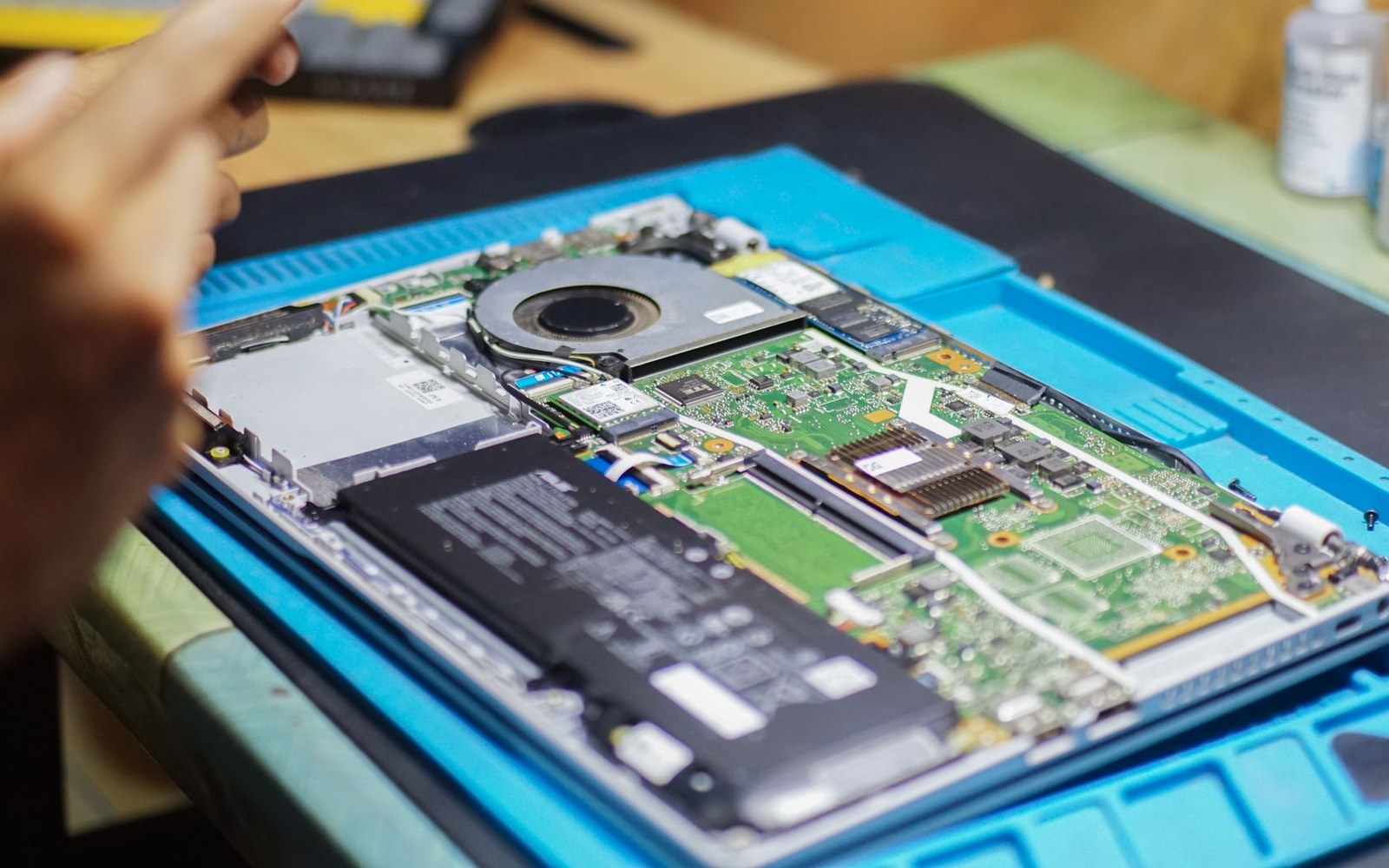
What the numbers actually say
Hard statistics on lifespan are difficult to extract cleanly, because industry and regulators measure different things. Manufacturers report designed lifespans in years; repair data captures actual replacement rates; e-waste tonnage is the bluntest measure of what gets discarded and when.
The European Environment Agency has reported that the average replacement cycle for consumer electronics shortened significantly between the 1990s and the 2010s. Smartphones now turn over in about two to three years in practice — closer to three years in Europe, closer to two in some high-churn markets — though the hardware could, by most engineering measures, last five or more. The gap between physical capacity and actual use is the number that should concern a buyer.
For smart home devices specifically, the picture is worse. A device category that did not exist before 2012 has already generated multiple generations of orphaned hardware: first-generation smart lighting bridges, early connected locks, cloud-first security cameras whose vendors have since been acquired or shut down. Home Assistant, the open-source local-control platform, maintains an integration catalogue that partly exists as a record of which vendor ecosystems have already failed and which can still be controlled by something other than the vendor's own servers. That catalogue grows every year.
iFixit's repairability scores offer another lens. Devices scored highest — typically modular, screwed-together, with documented parts — tend to come from categories where repairability was a design priority or a regulatory requirement. Devices scored lowest tend to be glued shut, use proprietary connectors, and pair components through serialisation so that a replacement part is rejected even when it is physically identical. The correlation between a low iFixit score and a short functional lifespan is not coincidental: the same design choices that make a device hard to repair also make it disposable.
What a buyer can do with the numbers
The practical upshot is that lifespan estimation now requires two separate calculations. First, ask how long the hardware will physically last — that is the traditional question, and for most consumer electronics the honest answer is longer than you will keep it. Second, ask what the device depends on to function: a vendor server, a companion app, a cloud authentication endpoint, a subscription. If the answer includes any of those, the device's lifespan is bounded by the vendor's business decisions, not by the quality of its components.
Devices that operate using open protocols — Zigbee, Z-Wave, MQTT, or the newer Matter standard — sit on a different curve. The protocol outlives any single vendor implementation, which is why hardware built around open radio layers still commands real resale value years after the original hub is discontinued. A Zigbee bulb bought in 2018 can be adopted by a new hub today. A proprietary smart plug from the same year, tied to a service that no longer exists, cannot be sold at any price because it cannot be used.
The European Commission's right-to-repair directive, adopted in 2024, begins to address the physical side of this — mandating spare parts availability and repair access for a broadening list of product categories. It does not yet compel vendors to maintain server infrastructure or open their authentication systems. The gap it leaves is exactly the gap where connected-device lifespans collapse.
What to watch in a spec sheet
- Update window — how many years the vendor promises OS or firmware support
- Server dependency — whether core functions require an active cloud endpoint
- Protocol layer — open (Zigbee, Z-Wave, Matter, MQTT) versus proprietary
- Repairability score — iFixit score or EU energy label repair index
- Parts availability commitment — years stated, categories covered
The number that matters most is not how long the device will run. It is how long the decision to run it belongs to the person who bought it.