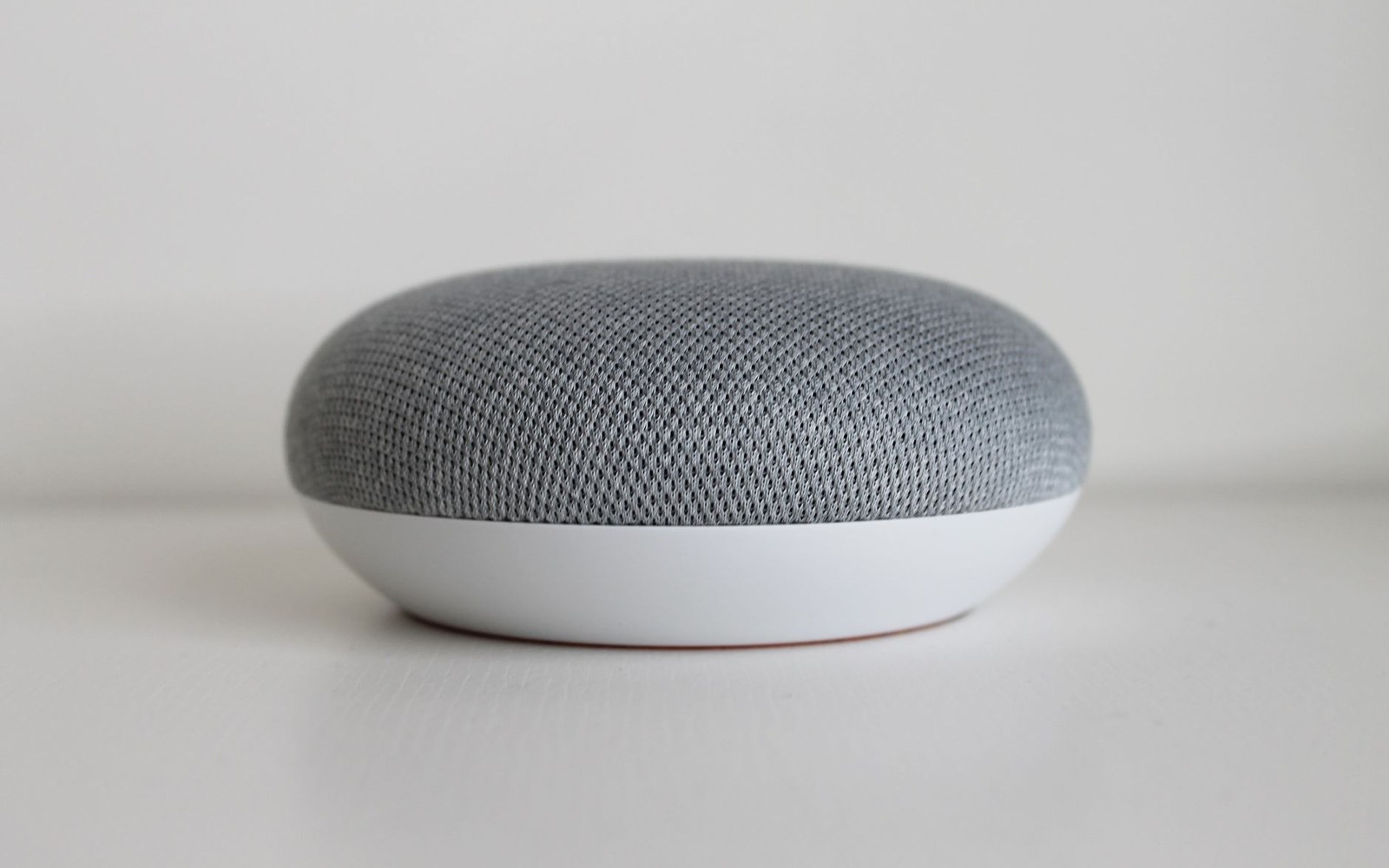
What Revolv was, and what Nest paid for it
Revolv launched in 2012 as a smart-home hub with an unusually broad radio stack. Where most hubs of the period committed to one wireless protocol, Revolv's hardware contained seven radios — Z-Wave, Zigbee, Wi-Fi, and several other home-automation frequencies — and the device retailed for $299. The pitch was interoperability: one box that could talk to almost anything already in a house. It was a credible proposition for 2012, when the smart-home market was fragmented and no one had yet agreed on anything.
Nest acquired Revolv in October 2014. The price was never disclosed, but the acquisition was widely reported as a talent and technology buy — Nest wanted the engineering team and, presumably, the multi-radio architecture. At the time, Nest was itself less than four years old and had recently been acquired by Google for $3.2 billion, a figure that established Nest as one of the largest consumer-electronics acquisitions of its era ↗. The Revolv hub stopped being sold almost immediately after the acquisition closed, which should have been a signal. It wasn't read as one.
Existing Revolv owners kept using their hubs. The hardware still worked; the app still worked; the service still ran. Nothing visibly changed for about eighteen months.
Chronology
- October 2014Nest acquires Revolv; hub immediately withdrawn from sale
- April 2016Nest announces shutdown of Revolv cloud service, effective 15 May 2016
- 15 May 2016Service terminated; all Revolv hubs cease functioning simultaneously
- 2021 onwardsEU Ecodesign Regulation begins imposing software-support requirements on certain electronics categories
The shutdown, and why it mattered
The Revolv shutdown has been cited in regulatory and academic discussions of connected-device longevity with a frequency that reflects how clean a case study it is.
In April 2016, Nest announced that Revolv's cloud service would be switched off on 15 May 2016. There would be no migration path, no local fallback mode, no refund. On the morning of 15 May 2016, every Revolv hub simultaneously became a $299 piece of inert plastic and aluminium. The seven radios inside each unit remained physically intact. The hardware had not failed. The server had stopped answering.
This is the mechanism that distinguishes a tethered device from a conventional appliance. A tethered device — one that authenticates its core functions against a vendor server rather than running them locally — has a lifespan set by the vendor's business decisions, not by its components. The Revolv hub's components were fine. Its commercial reason to exist had been acquired and then retired.
The response was faster and louder than Nest appeared to expect. Arlo Gilbert, a Revolv customer and software company CEO, published a widely circulated account of the shutdown that framed it explicitly as property destruction: a company had sold a device and then reached into customers' homes and switched it off. The framing stuck. iFixit, the repair advocacy organisation that maintains detailed teardown documentation and repairability scores for consumer hardware, ran a commentary under the headline "Nest is Bricking Revolv Hubs" — and the piece used the Revolv case to argue that cloud dependency was a design choice, not a technical necessity, and that it transferred risk from manufacturer to consumer in a way buyers rarely understood at the point of purchase.
The timing amplified everything. The right-to-repair movement was gathering legislative momentum in the United States and Europe. The Revolv shutdown arrived as a concrete, dateable, photographable example of what advocates had been arguing in the abstract: that ownership of connected hardware was conditional in ways that traditional consumer-protection law had not anticipated. The device was real. The price was on record. The date of death was precise.
What the hardware actually contained, and why it couldn't save itself
The practical cruelty of the Revolv shutdown was partly technical. The hub's seven radios were not the problem; they would have continued to function. What the device lacked was any ability to run its own logic locally. All scheduling, all automation rules, all the decision-making that made the hub useful lived in Nest's cloud. The Revolv app on a user's phone was essentially a remote interface for a server. Without the server, the app had nothing to talk to, and the hub had no instructions to execute.
This is a different failure mode from a device that bricks because of a bad firmware update — bad updates can sometimes be reversed, and the device's own processing capacity is usually still there. The Revolv failure was architectural: the processing had been deliberately kept off the device. There was no firmware fix, no community patch, no jailbreak that could restore the hub's function without recreating the cloud infrastructure it depended on. Some users attempted to run local proxy servers to intercept the hub's API calls; the results were partial at best, and required a level of technical effort that no ordinary buyer could be expected to provide.
The Connectivity Standards Alliance — which manages the Zigbee specification and, more recently, the Matter standard — had been arguing for years that open radio protocols created resilience precisely because they decoupled devices from any single vendor's infrastructure. A Zigbee sensor that works with one hub can be re-paired to another. A hub that requires one specific vendor's cloud cannot be re-paired to anything. The Revolv case made that argument viscerally rather than theoretically. The Zigbee specification ↗ the Revolv hub partially implemented outlasted Revolv by years and remains in active deployment; the Revolv service lasted less than two years after the acquisition closed.
The long shadow: citation and legislation
The Revolv shutdown has been cited in regulatory and academic discussions of connected-device longevity with a frequency that reflects how clean a case study it is. It has a known product, a known price, a named acquirer, and a single day on which every unit stopped working. That clarity is rare. Most tethered-device failures are messier — services degrade, apps stop receiving updates, functionality silently drops away. Revolv died at a moment.
The European Commission's work on sustainable products and the right to repair, which produced enforceable obligations on spare-parts availability and software support for certain device categories from 2021 onwards, does not name Revolv explicitly, but the underlying policy problem it addresses is the one Revolv illustrated. The European Commission's Ecodesign Regulation sets minimum requirements for repairability and software support, though its coverage of smart-home hubs remains limited. Cloud-dependency as a design choice falls mostly outside current statute; legislation has moved faster on physical repairability than on service longevity.
Home Assistant, the open-source home-automation platform that runs entirely on local hardware, saw meaningful growth in the period following the Revolv shutdown. Its developers have cited cloud-dependency failures as the direct motivation for architectural choices that keep all processing on the user's own network. That is not coincidence; it is a direct technical response to the failure mode Revolv demonstrated.
What the device cost
For anyone buying a smart-home hub today, the residual value calculation has to include the possibility that the manufacturer will exit the market, be acquired, or simply decide the service is no longer worth running. Revolv sold for $299 and returned zero on that investment — not because it wore out, not because it was superseded by something the owner chose to adopt, but because the company that bought it decided it was more useful as a shutdown than as a product. The hardware is still physically intact in some cases. It does not matter.