When opening costs more than fixing
A replacement battery for a mid-range laptop often costs less than fifteen dollars. The same repair quoted at an authorised shop routinely runs well over a hundred, and a significant part of that gap is not labour skill — it is the opening. Manufacturers have spent roughly two decades replacing Phillips screws with pentalobe fasteners, tri-wing bolts and, most decisively, adhesive. Every gram of glue is a design choice with a financial consequence for the person who bought the device.
Adhesive assembly is not inherently dishonest. It can reduce thickness, improve water resistance and damp vibration. But when the same adhesive that seals against moisture also prevents a routine battery swap without destroying the rear panel, the function and the lock-in happen to coincide very neatly. iFixit has documented this pattern across successive generations of smartphones, tablets and earbuds, finding that repairability scores have in several cases fallen even as the underlying components remained accessible in principle.
Proprietary fasteners compound the problem. A pentalobe screw requires a pentalobe driver; a tri-point screw requires a tri-point driver. Neither tool serves any other purpose in a household toolkit. The fastener itself costs the manufacturer almost nothing extra, but it raises the cost of consumer-initiated repair by adding a tool-acquisition step that most people will not take. The friction is the feature.
Chronology
- ~2008–2012Pentalobe and other proprietary fasteners begin appearing in consumer electronics, documented first in Apple hardware
- 2010s–presentAdhesive sealing spreads from smartphones to tablets, laptops and true-wireless earbuds
- 2023–2024EU Ecodesign for Sustainable Products Regulation and US state right-to-repair statutes begin addressing physical accessibility
Whether enforcement produces thicker adhesive with a regulatory-approved peel tab, or a genuine return to screws, is a question the next hardware generation will answer.
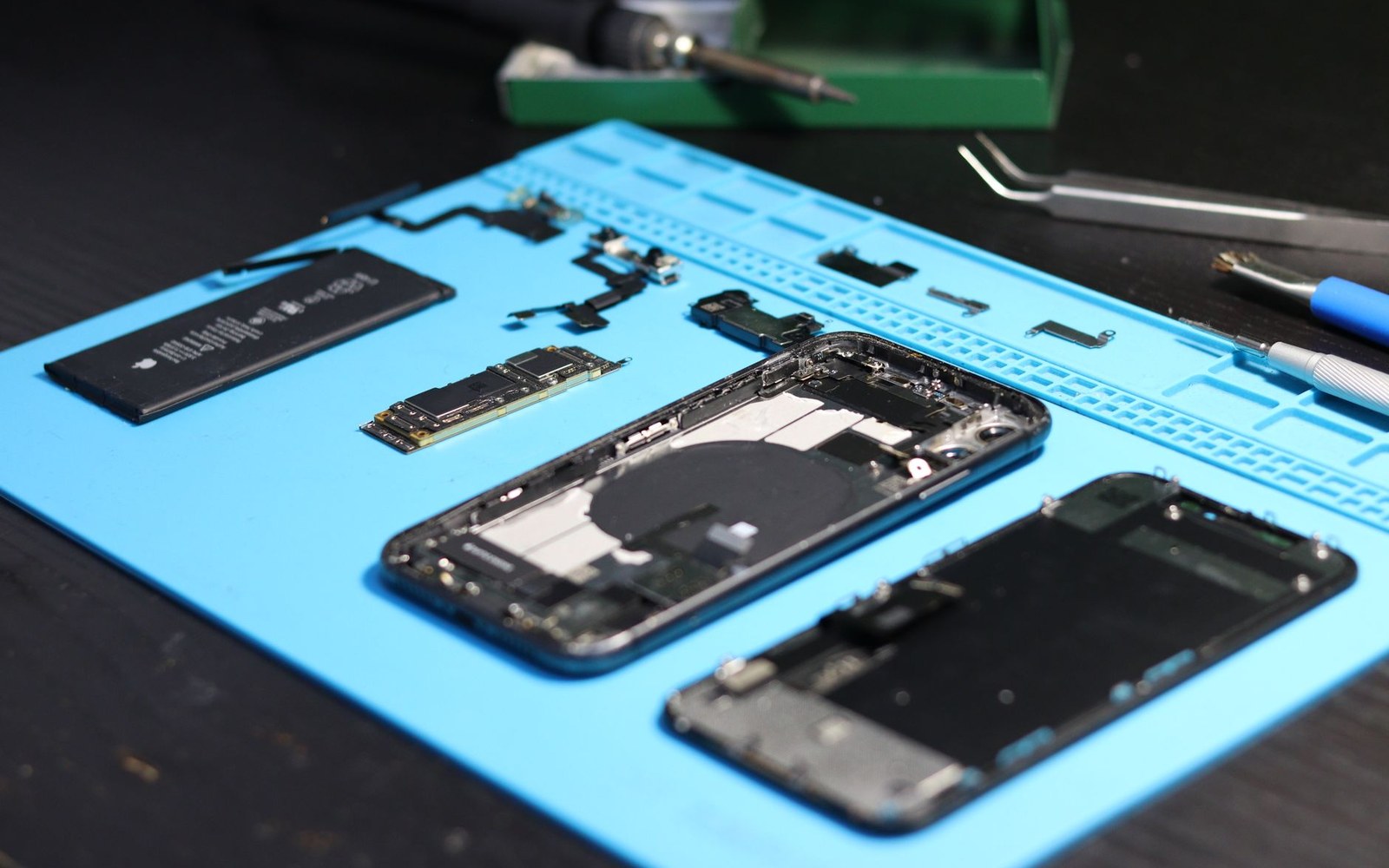
The downstream effect lands on residual value. A device that cannot be independently serviced depreciates faster, because the cost of keeping it functional rises with age. A five-year-old phone with a degraded battery is worth almost nothing if the battery replacement requires specialised adhesive remover, a heat gun and a proprietary bit set. The same phone with a user-replaceable battery retains real utility.
Right-to-repair legislation ↗ now forming in the European Union and several American states targets exactly this layer — not just the availability of parts, but the physical accessibility of the device. The European Commission's Ecodesign for Sustainable Products Regulation extends repairability requirements to a growing category list, and fastener design is increasingly in scope. Whether enforcement produces thicker adhesive with a regulatory-approved peel tab, or a genuine return to screws, is a question the next hardware generation will answer.
For a buyer calculating a five-year horizon: check the repairability score before purchase, not after. A device glued shut on day one is a device with a repair cost baked in — and that cost will arrive before the hardware itself fails.