What gets counted and what does not
The most widely cited source is the Global E-waste Monitor, published by the United Nations Institute for Training and Research in partnership with the International Telecommunication Union and the International Solid Waste Association. The 2024 edition put global e-waste generation at 62 million tonnes in 2022, up from 53.6 million tonnes in 2019, and projected the total will reach 82 million tonnes by 2030 if current trends hold. These figures are reproduced across policy documents, corporate sustainability reports and press releases worldwide, which gives them an authority that can obscure a quieter admission buried in the methodology: a substantial share of the total is estimated, not measured.
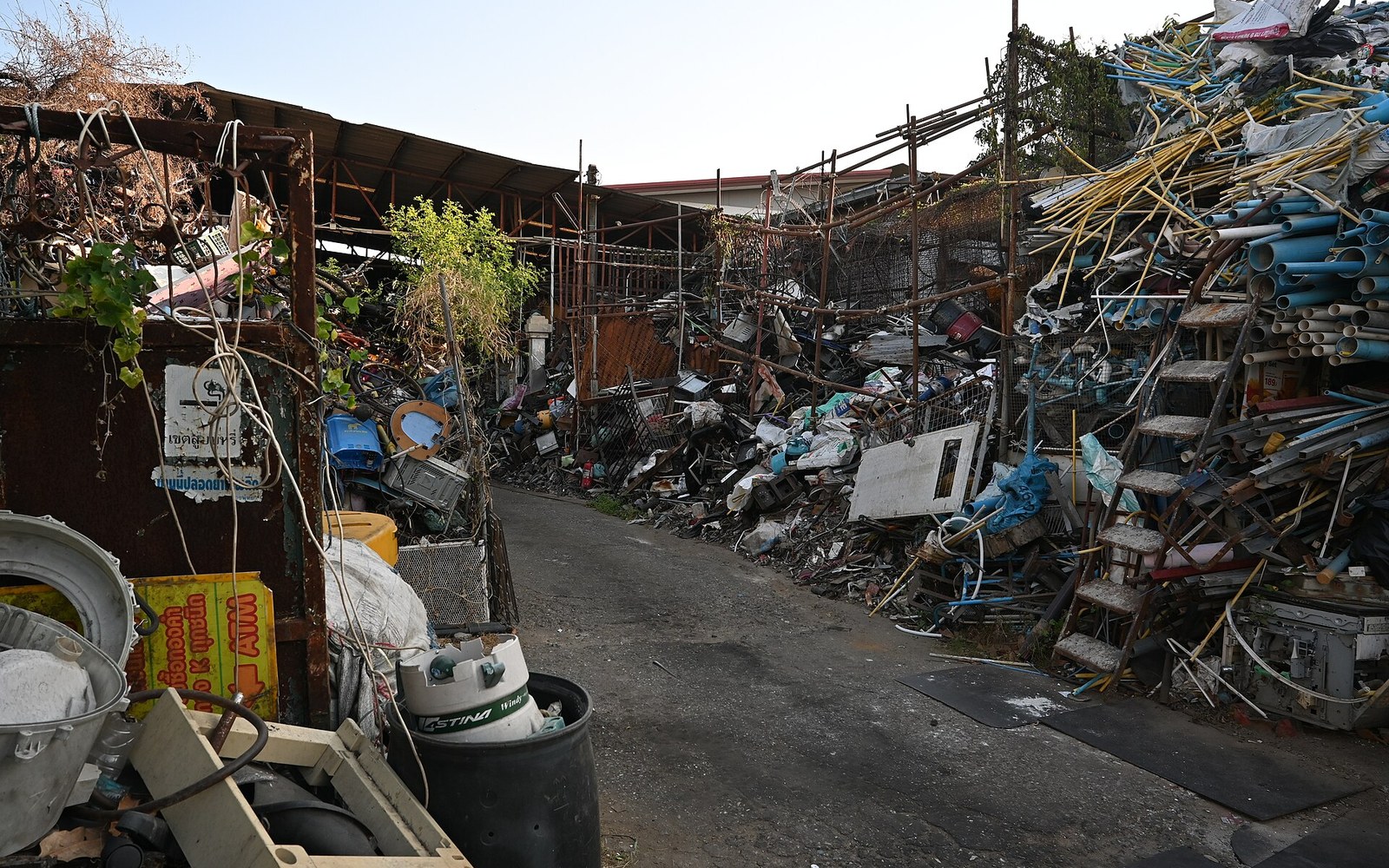
The monitor's methodology counts products by weight at end of life, working backward from sales data, assumed lifespans and regional consumption models. Where collection infrastructure exists, weigh-bridge records and registered recycler volumes can cross-check the estimate. Where it does not — across large parts of sub-Saharan Africa, South and Southeast Asia and Latin America — the figure is a model output, not a measurement. The Global E-waste Monitor acknowledges this directly, noting that only 22.3 percent of e-waste generated in 2022 was documented as formally collected and recycled. The remaining 77.7 percent was either landfilled, burned, handled through informal channels or simply unaccounted for.
That 22.3 percent figure is itself an average that conceals enormous regional variation. Europe, which has had the Waste Electrical and Electronic Equipment Directive — the WEEE Directive — in force since 2003, reported collection rates well above the global average. Asia as a whole, which generates the largest share of e-waste by volume given its population and manufacturing base, reported rates far lower. The informal sector in countries such as Ghana, Nigeria and India recovers substantial material — copper, gold, palladium from circuit boards — through processes that are hazardous to workers and rarely enter any official ledger. When informal recovery is excluded from the collection figures, the collection rate appears worse than reality in one sense; when it is included without health or environmental accounting, the picture appears better than it is in another.
Chronology
- 2003WEEE Directive enters force in the European Union
- 2016Nest shuts down the Revolv hub service; devices bricked, no formal return mechanism
- 2019Global E-waste Monitor records 53.6 million tonnes generated
- 2022Global E-waste Monitor records 62 million tonnes generated; 22.3 % formally collected
- 2024EU Right to Repair Directive adopted; Global E-waste Monitor 2024 edition published
- 2030Projected 82 million tonnes generated if current trends continue
Why the categories themselves are contested
E-waste reporting typically measures in tonnes, which makes the aggregate sound manageable when spread across a global population.
Even before a tonne reaches a scale, there is the question of what counts as e-waste. The WEEE Directive, the most developed regulatory framework for this material, defines categories ↗ that run from large household appliances through IT and telecommunications equipment to photovoltaic panels and medical devices. Each revision of the directive has expanded the scope, which means a 2010 figure and a 2022 figure are not strictly comparable: the denominator changed. A solar panel installed in 2012 and reaching end of life in the early 2030s will enter the e-waste stream under rules that did not exist when it was manufactured.
Smart home devices sit in a category — small IT and telecommunications equipment — where the gap between what is physically recycled and what is registered as collected is particularly difficult to close. A hub the size of a hockey puck, a smart speaker, a connected thermostat: these are individually light, bought in large volumes and rarely returned through formal take-back programmes. When Nest acquired Revolv and shut down its hub service in 2016, the devices became non-functional overnight. None of that physical material entered a formal recycling stream in any documented way, because there was no mechanism to return it and no legal obligation to provide one at the time.
The weight problem compounds the category problem. E-waste reporting typically measures in tonnes, which makes the aggregate sound manageable when spread across a global population. But the toxicity content of electronic waste — lead, cadmium, mercury, brominated flame retardants — does not scale linearly with weight. A kilogram of circuit board stripped in an open fire in Agbogbloshie, the informal recycling site on the edge of Accra that has been the subject of repeated environmental sampling, releases a burden of persistent organic pollutants that a tonne of steel scrap does not approach. Measuring by mass and reporting a collection percentage papers over this asymmetry entirely.

The gap between statute and scale
Regulatory ambition has grown. The European Commission has progressively tightened WEEE targets, and the Right to Repair Directive adopted in 2024 introduces repairability requirements that, if effective, should extend product lifespans and reduce the volume entering the waste stream. The logic is straightforward: a device repaired is a device not discarded. Whether the directive's requirements — spare parts availability, repair manuals, software support — translate into measurable lifespan extension at population scale is a question the directive's own review mechanisms will eventually have to answer. The commission's impact assessment projected lifespan gains, but projections built on assumed consumer behaviour are themselves a form of modelling.
In the United States, there is no federal e-waste framework comparable to WEEE. State-level programmes vary widely in scope and enforcement, and the national picture assembled by the Environmental Protection Agency relies substantially on voluntary industry reporting. The practical consequence is that the United States, the second-largest generator of e-waste by total volume, has a measurement apparatus considerably weaker than its generation rate warrants.
What this means for anyone buying connected hardware is not abstract. A device with no repair path, no local control fallback and a single vendor's servers standing between it and function will have a short working life. When that life ends — through a service shutdown, a failed firmware update or simple commercial discontinuation — the physical unit joins a stream that is mostly not collected, mostly not recycled formally and mostly counted, if at all, through a methodology honest enough to admit its own limits. The headline figure of 62 million tonnes is real and rising. The collection figure of 22.3 percent is real and falling behind generation. Everything in between is, to a meaningful degree, an estimate of something the world is not yet equipped to measure properly.